Mountain Skills & Wild Camps: Gain Confidence in the Cairngorms
From bivy mishaps to peaceful summit camps, I explore what planning your own successful mountain expedition can look like. Wild camping tips, sleep systems, where to find a good route, plus more
Will Hall
2/23/20264 min read
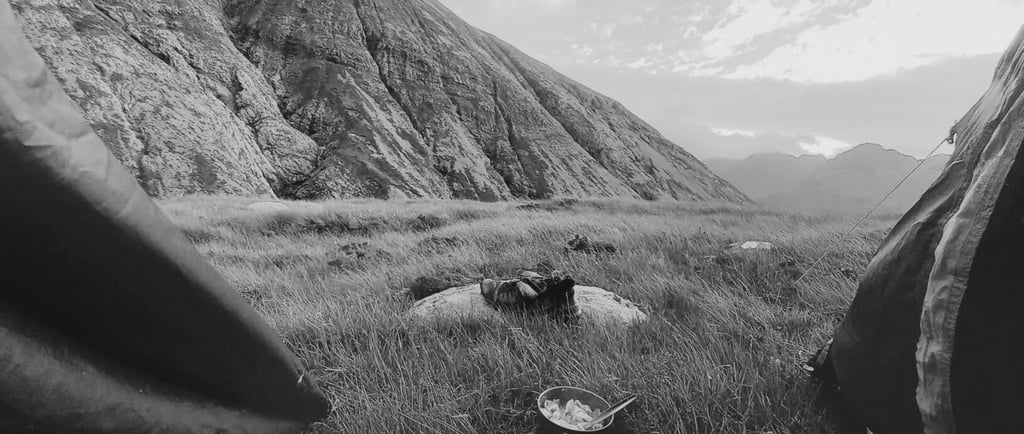
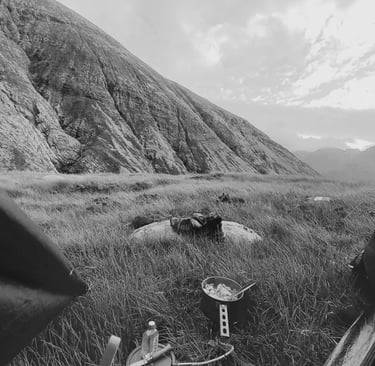
“They are the best of nights; they are the worst of nights.”
– The Book of the Bivy
From peaceful summit camps to long wind-battered nights, wild camping has a way of teaching you quickly what works well and what doesn’t.
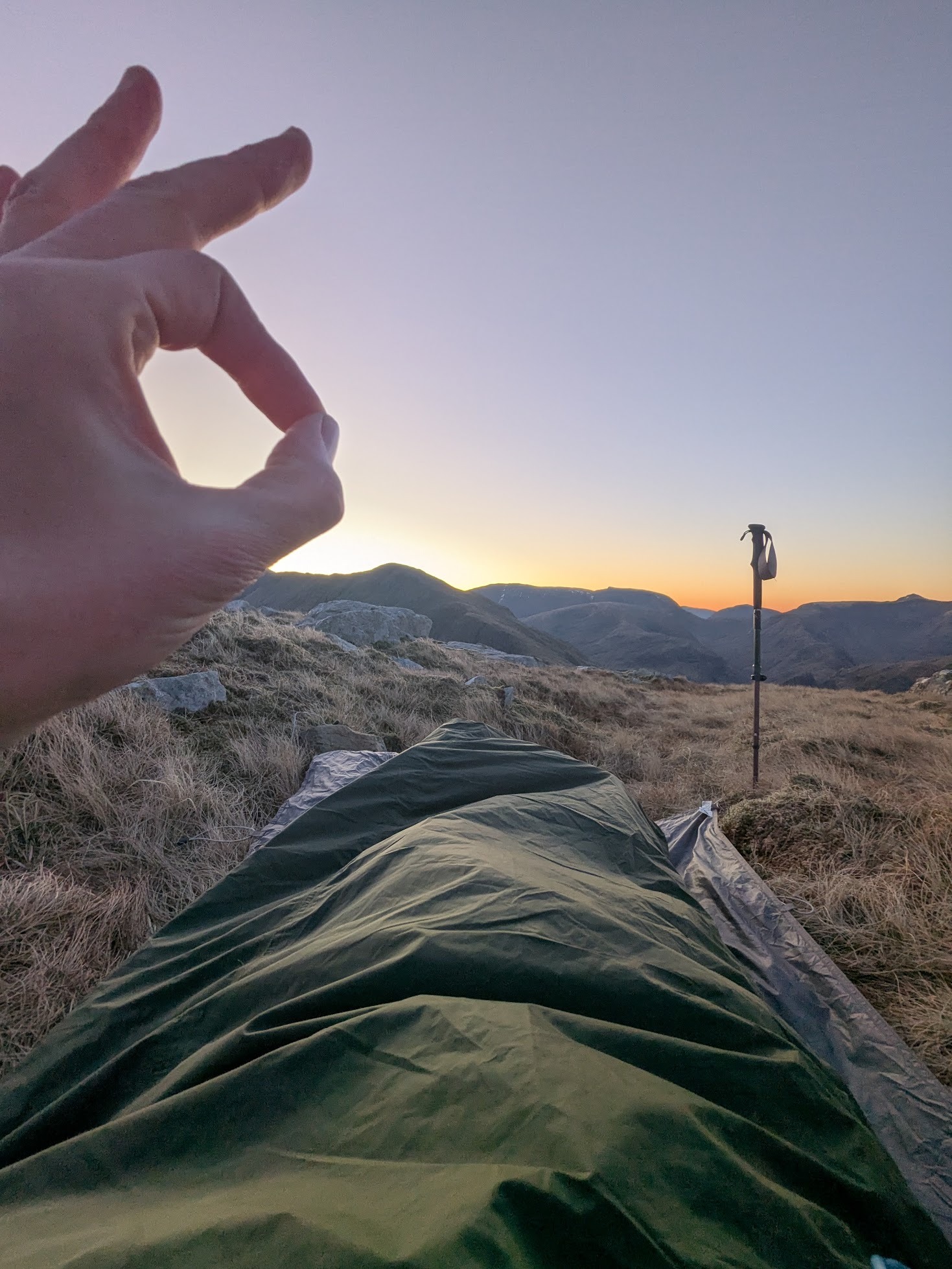
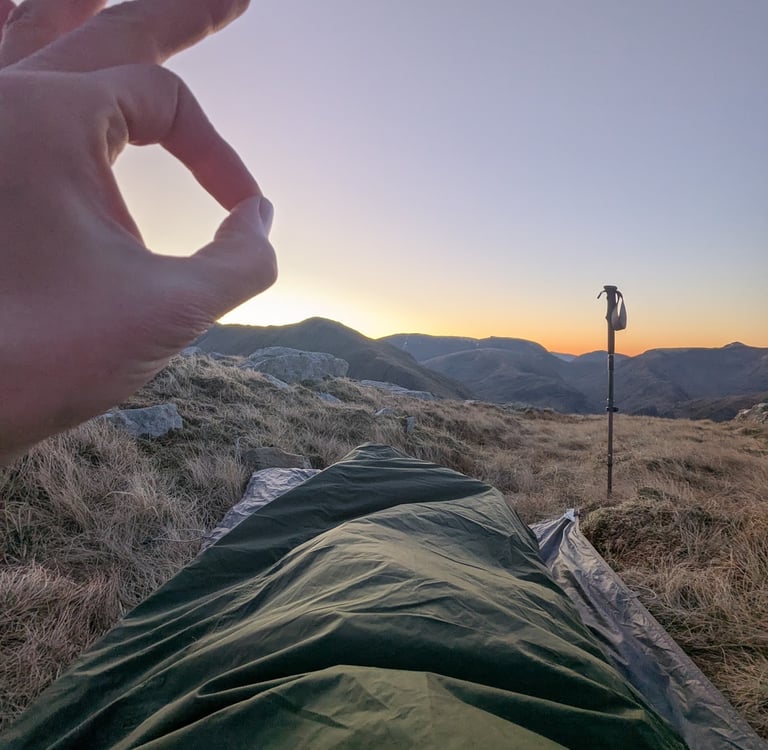
Last summer, while walking part of Wainwright’s Coast to Coast (a 192 mile route from the Irish to the North Sea) I spent a night in the Lakes, bivvying with the midges in completely still air. I barely slept. The following night, with a bit of breeze and a higher spot on the fells, I slept deeply and woke feeling restored.
Same kit, same intention, but very different outcomes.
That’s the reality of wild camping and why judgement, experience and preparation matter far more than toughness.
If you’re wondering what the heck a “bivy bag” is, it’s essentially a waterproof plastic bag you sleep in!
Invest in Sleep – my wild camping kit
I might reach for the bivy if I’m feeling the urge for a bit of discomfort (am I the only one?). But nine times out of ten, I’ll choose my tent. I swap between my Alpkit Jaran 2 and Alpkit Tarpstar 1, both solid and decent value options.
If there’s one area worth investing in for wild camping, it’s your sleep system. A reliable tent, a warm sleeping bag and a good sleeping mat make a huge difference. My neck and back have been thanking me since I upgraded to a Thermarest NeoAir XLite and wonder why I didn’t do it sooner! There’s a gnarly story about how I ended up with a sore neck and back – but I’ll save that one for another blog…! Mats insulate you from the ground and keep you toasty. Remember: one beneath is better than two on top.
This became clear for me on long walks like the Cape Wrath Trail. A good night’s sleep sharpens your mind, navigation, makes walking easier and simply makes the day more enjoyable. A poor night sleep can feel like you've skipped breakfast and dinner: it doesn’t just slow your legs, it slows your thinking. Fatigue affects your judgement as much as your body.
My key takeaway: invest in your sleep and the hills will repay you!
Wild Camping Tips for Beginners
The most difficult wild camping experiences come down to timing and location, not experience level.
A few simple principles can go a long way:
Go with a buddy
My first wild camps were with pals: sharing lifts, kit, knowledge and stories. This boosted my confidence to eventually head out on my own adventures.
Make a plan… with maps!
It’s good to have your route ready with several potential camping spots in mind. I might start by looking up previous routes on Walkhighlands or Steven Fallon (both Scotland specific), then take a closer look at a maps/routes and find some suitable campgrounds, trying to avoid wet or boggy ground!
Check the weather
The first places I look are MWIS (Mountain Weather Information Service) and Met Office Forecasts before an expedition to see overall weather but importantly, wind direction and speed. Protection from wind is important - you don’t want to be on a col/bealach when there’s a midnight gust! There are plenty of other fab weather apps, I'd love to know your favourites,
Think about water
Planning your water and toileting is key for a good night in the mountains. Season matters too, as in the heights of summer choosing to camp right next to a stream or loch could potentially be a total midge fest.
Give yourself lots of time
Having a backup camping option in mind means when your ideal camping spot isn’t feasible, you’re not trudging on into the night (and getting eaten alive by midges). With camp all set up, kettle/dinner on for the sunset is one of the best feelings I know.
Navigation and Mountain Competence
Outside of guiding, I work as a community youth worker for Space @ Broomhouse. I recently asked my group: how does someone become more confident at something?
We spoke about experience. Time on your (proverbial) feet. Repetition. Getting things wrong sometimes and learning from it. That's how confidence is built.
Wild camping in the mountains is no different. It takes more than enthusiasm (although this helps!). It’s route planning properly, reading contours and understanding what the ground will feel like. Measuring distance and timing. Using your compass when the cloud drops. Recognising hazards and adjusting your plan.
In Scotland, we’re lucky. The Right to Roam was established under the Land Reform Act 2003 and guided by the Scottish Outdoor Access Code – which allows responsible wild camping. That freedom is one of the reasons I chose to move north. I’m keen to celebrate this and share it with other adventurers.
But it only works if we’re competent. England and Wales don’t offer the same access yet, so wild camping is largely restricted or technically requires permission. The general rule is: camp above the highest fell wall, pitch late, leave early and leave no trace.
In Scotland, that freedom exists because responsibility is expected. We'll talk about this and much more on my Mountain Skills Courses in the Cairngorms National Park, where I give folks the knowledge and experience to use that freedom well.
Why I Keep Wild Camping
Writer Alastair Humphreys talks about microadventures – small journeys that still feel meaningful. Wild camping fits that idea perfectly.
Life gets busy, noisy and full. For me, heading into the hills with everything on your back, choosing a spot, cooking a meal and waking up to morning light on your tent in the mountains is about as good a reset as I know. It slows things down and clears my head.
When was the last time you journeyed through the mountains like that?
Learning the Skills
If this has sparked something, I’d love to hear about your own plans. And if you’d like to build the skills to do it well, that’s exactly what my Mountain Skills Courses in the are for. I also offer Bespoke Expeditions which I plan around your goals and interests, just message me for further info.
On the courses we focus on solid navigation, thoughtful route planning, simple camp craft, environmental awareness and steady decision-making in mountain terrain. Small groups in a supportive setting. There’s learning, laughs, conversation, and yes, there’s always a bit of craic.
Thanks for reading!